






Why India’s Technology Pioneers Sit on Sai University’s Board, and the Significance of N. Chandrasekaran’s Honorary Doctorate
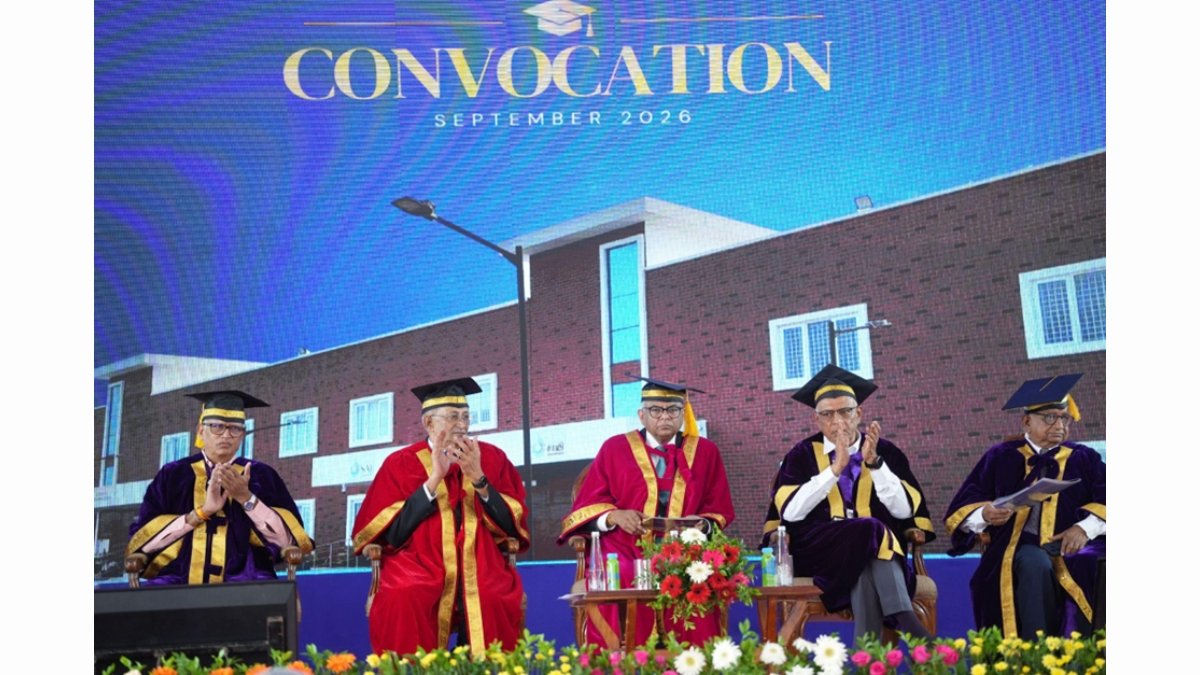
New Delhi [India], September 22: When Sai University conferred an honorary Doctor of Science (D.Sc.), Honoris Causa, on Padma Bhushan Shri Natarajan Chandrasekaran, Chairman of Tata Sons, at its Convocation on 19 September, the occasion brought together two themes that have shaped the University since its founding: technology-led innovation and institution-building.
Sai University counts among its Governing Council and its circle of distinguished guests several individuals who have played significant roles in shaping India’s technology and knowledge ecosystem. Padma Vibhushan N. R. Narayana Murthy, co-founder of Infosys, and Padma Shri T. V. Mohandas Pai, Chairman of Manipal Global Education and a former Infosys board member, are both closely associated with the institution, alongside figures such as Shri Ashank Desai of Mastek and Justice M. N. Venkatachaliah, former Chief Justice of India. Their association reflects the University’s efforts to bring perspectives from industry, technology, academia and public life into its institutional ecosystem.
It helps that the two people steering Sai University day to day bring together complementary perspectives from industry and research.
Founder and Chancellor Shri K. V. Ramani is one of the early architects of India’s IT services industry. He joined IBM as a graduate engineer in 1970, went on to found Future Software and co-found Hughes Software Systems, and was a founding force behind NASSCOM, serving as its Chairman in the late 1990s. NASSCOM presented him with its Founder’s Award in 2015 for his contribution to putting India on the global IT map. He continues to serve as Chairman and Managing Director of Digital Holdings Pvt. Ltd.
Vice-Chancellor Prof. Ajith Abraham brings the research dimension to the University’s leadership. He is ranked among the top 0.01% most-cited scientists globally in engineering and computer science, with more than 71,500 citations, over 1,500 publications and research funding exceeding US$110 million across projects spanning the United States, Europe and Asia. He has edited one of the oldest journals in artificial intelligence and founded a machine intelligence research lab in Seattle.
Between them, Ramani and Abraham give Sai University something fairly unusual for an institution this young: leadership that brings together experience in building technology enterprises with globally recognised academic research. That combination is reflected directly in how the University designs its degrees. Each of its eight schools, from Law and Media Studies to Allied Health Sciences, follows what the institution calls an “AI + X” approach, treating artificial intelligence as a shared foundation across disciplines rather than as a specialisation reserved only for computing students.
At the University’s Third Convocation, Shri Natarajan Chandrasekaran was conferred the degree of Doctor of Science (D.Sc.), Honoris Causa. The citation accompanying the honour described him as a “technology leader and business statesman whose career exemplifies education, innovation, perseverance and ethical leadership.” Sai University conferred the honorary degree in recognition of his outstanding contributions to industry, business, technology and innovation, education and society, and for his role in globalising India. The citation also highlighted his journey from Tata Consultancy Services to the chairmanship of Tata Sons and his leadership across digital transformation, sustainability and emerging industries.
The conferment also reflected a broader connection between the values recognised in Chandrasekaran’s career and Sai University’s emphasis on bringing technology, research, industry and education closer together. As Chief Guest, Chandrasekaran addressed the graduating class on navigating an era shaped by artificial intelligence and rapid economic and technological change, urging students to remain curious, keep learning and measure themselves against their own progress.
Seen against that backdrop, the honorary doctorate was a significant moment in Sai University’s Third Convocation, bringing together the University’s academic mission with a career recognised for contributions across technology, industry, innovation and institution-building.
About Sai University
Sai University was established by the Tamil Nadu State Legislature under the Sai University Act No. 42 of 2018 and is recognised under Section 2(f) of the University Grants Commission (UGC) Act, Government of India, as well as by the Association of Indian Universities (AIU) and the Bar Council of India.
It is positioned as India’s future-ready, AI-first university. Founded by Shri K. V. Ramani, co-founder of NASSCOM, who serves as Founder and Chancellor, the University is led by Vice-Chancellor Prof. Ajith Abraham, ranked among the top 0.01% most-cited scientists globally in engineering and computer science.
Across its eight schools, spanning Artificial Intelligence, Computing and Data Science, Law, Media Studies, Business, Allied Health Sciences, Arts and Sciences, and Technology, artificial intelligence is integrated as a foundation rather than an add-on. The University’s 103-acre campus on OMR, Chennai, includes dedicated labs for artificial intelligence, robotics, drones, allied health sciences and psychology; a functioning Moot Court for the School of Law; and a sports complex inaugurated in March 2026.
If you object to the content of this press release, please notify us at pr.error.rectification@gmail.com. We will respond and rectify the situation within 24 hours.