






Water Transversality: The New Frontier of Climate Resilience at SB64 Bonn
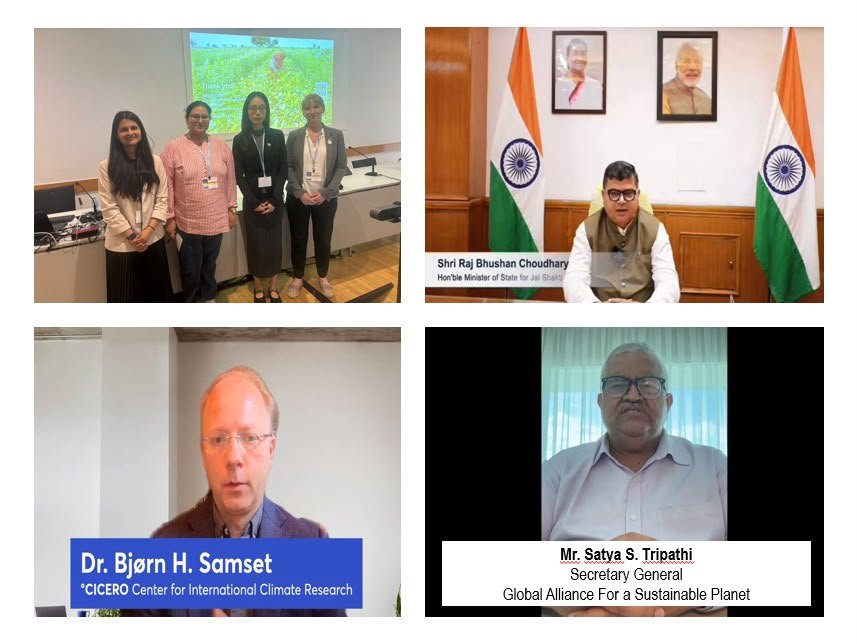
Bonn [Germany], June 22: As climate impacts intensify across the globe, a growing consensus is emerging that water must move from the periphery to the centre of climate governance. Against this backdrop, India Water Foundation (IWF), in partnership with CICERO (Center for International Climate Research) and the AKO Foundation, convened a High-Level Policy Dialogue on “Cross-Sector Partnerships for Water Security in a Climate Resilient World”, an official side event of the 64th Sessions of the UNFCCC Subsidiary Bodies (SB64) at the World Conference Center Bonn (WCCB), Germany.
Bringing together distinguished policymakers, scientists, researchers, and development practitioners, the Dialogue explored how water can serve as the critical connector linking climate resilience, food security, public health, biodiversity conservation, energy transitions, and sustainable economic development. Participants underscored that fragmented sectoral approaches are no longer fit for purpose in an era of interconnected climate risks and called for a new governance paradigm rooted in water transversality.
Distinguished speakers included Dr. Arvind Kumar, President, India Water Foundation; Dr. Raj Bhushan Chaudhary, Minister of State, Ministry of Jal Shakti, Government of India; Dr. Bjørn Hallvard Samset, Research Professor, CICERO; Dr. Satya Tripathi, Secretary General, Global Alliance for a Sustainable Planet; Dr. Marianne T. Lund, Research Professor, CICERO; Ms. Shweta Tyagi, Chief Functionary, India Water Foundation; Ms. Milloni Doshi, Manager, Global Engagement and Partnerships, Environmental Defense Fund; and Ms. Daile (Iris) Zeng, PhD Student, University of British Columbia.
Opening the Dialogue, Dr. Arvind Kumar emphasized that climate impacts are increasingly experienced through water, whether in the form of floods, droughts, groundwater depletion, glacier retreat, ecosystem degradation, or sea-level rise. Introducing the concept of water transversality, he called for embedding water considerations across climate strategies, development planning, biodiversity frameworks, agriculture, energy systems, and infrastructure investments. Stressing the need to govern the entire hydrological cycle, he advocated for integrated approaches that combine science, technology, ecosystem restoration, innovative finance, and inclusive governance. As he aptly observed, “Water is the operating system of climate resilience.”
Delivering the Chair Address, Dr. Raj Bhushan Chaudhary highlighted India’s efforts to integrate water security into national climate action through its Nationally Determined Contributions (NDCs), National Adaptation Plan (NAP), and flagship programmes such as Namami Gange, reaffirming that water is both a climate priority and a catalyst for sustainable development.
Dr. Satya Tripathi called for rewarding grassroots climate champions and proposed the scaling of water credits as an innovative mechanism to incentivize water conservation, ecosystem restoration, and sustainable livelihoods.
Providing a scientific perspective, Dr. Bjørn Hallvard Samset underscored the accelerating impacts of climate change on the global water cycle and stressed the importance of translating scientific knowledge into actionable solutions that support adaptation and resilience on the ground.
Dr. Marianne T. Lund highlighted the complex interactions between climate change, land-use change, urbanization, aerosols, and water availability, emphasizing the need for evidence-based adaptation strategies grounded in robust climate-water science.
Moderating the Dialogue, Ms. Shweta Tyagi stressed that with nearly three-quarters of the world’s population living in water-insecure regions, stronger cross-sector partnerships, science-driven solutions, and collaborative governance models are essential to building resilience in an increasingly water-stressed world.
The Dialogue generated a strong call for action centred on embedding water across climate and development frameworks, strengthening science-policy interfaces, scaling nature-based and engineered solutions, mobilizing innovative financing mechanisms, supporting community-led action, and fostering collaboration across sectors and institutions.
Concluding the event, participants called for stronger international cooperation, greater investment in water resilience, and the systematic integration of water transversality into global climate processes. As the world moves toward COP31 and the 2026 UN Water Conference, the Dialogue delivered a clear message: the future of climate resilience will be shaped by how effectively the global community manages, values, and governs water.