




Choosing Skill-Based Learning and Practical Industry Exposure Over Traditional Education Models at MIT University, Sikkim
Gangtok (Sikkim) [India], May 23: Thousands of students across India spend hours comparing universities online, checking approvals, reading reviews, and verifying degree validity before taking admission. However, many students still remain confused because most information available online is either overly promotional or incomplete. Among the universities gaining attention in 2026 is MIT University Sikkim, especially among students looking for modern, skill-based, and industry-focused education.
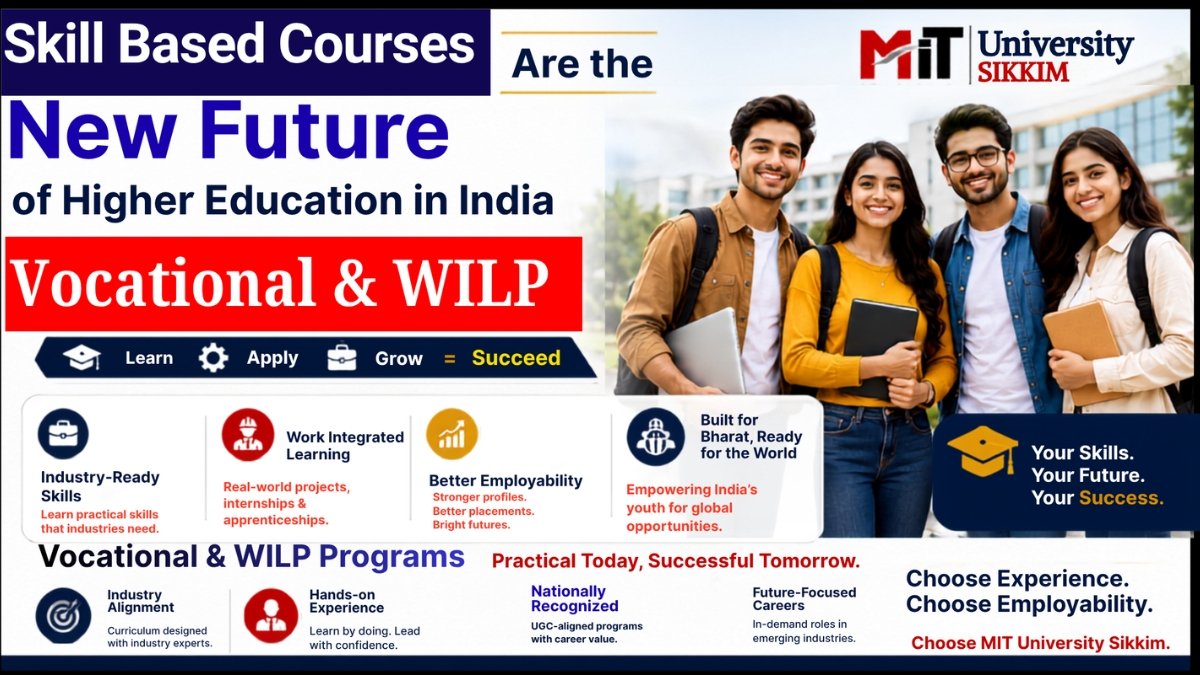
Vocational and Work Integrated Learning Programs (WILP) Becoming the New Future of Higher Education
Education experts believe Vocational and Work Integrated Learning Programs (WILP) are becoming far more career-focused than many traditional online and distance education models. Modern industries now prefer students with practical skills, internship exposure, live project experience, and real workplace understanding instead of only theoretical learning.
Unlike old-style distance education trends, Vocational and WILP programs focus on:
- Practical training
- Industry exposure
- Skill development
- Live projects
- Internship opportunities
- Career readiness
Experts say companies today increasingly value employability and practical competency, which is why industry-oriented education models are growing rapidly under NEP 2020 and Skill India initiatives.
MIT University Sikkim is among the universities focusing strongly on NEP 2020-based curriculum, Vocational education, and Work Integrated Learning Programs (WILP) designed around modern industry demands in fields such as Artificial Intelligence, Data Science, Cyber Security, Cloud Computing, and Business Analytics.
Education analysts also clarify that NAAC is mainly a quality assessment system, while the legal validity of a university depends on UGC recognition. MIT University Sikkim is recognised under Section 2(f) of the UGC Act, and experts say its degrees remain valid for higher education and employment opportunities as per applicable regulations.
Students today are increasingly choosing universities that focus on future careers, practical learning, and industry readiness rather than only traditional classroom-based education models.
UGC Recognition and Degree Validity?
One of the most searched questions about MIT University Sikkim is whether the university is officially recognised. According to available information, the university is recognised by the Government of India under Section 2(f) of the UGC Act. Students can independently verify the university listing under the name “Management and Information Technology University” in Sikkim.
Education experts say students should always verify:
- Legal recognition
- Degree validity
- Curriculum quality
- Student support systems
- Fee transparency
- Industry exposure
before taking admission in any university.
Why Does the University’s NAAC Accreditation Matter?
Many students believe NAAC accreditation automatically increases the value of a degree, but education experts clarify that the legal validity of a degree mainly depends on UGC recognition and official government approval.
NAAC is mainly a quality assessment system that evaluates infrastructure, curriculum, teaching standards, governance, and academic systems. Newly established universities usually require operational years or graduating batches before becoming eligible for NAAC accreditation.
Experts also note that universities following NEP 2020 guidelines already work on many academic quality standards related to curriculum structure, vocational learning, skill-based education, internships, industry exposure, and student support systems that are also important parts of NAAC compliance.
Education analysts say many universities significantly increase their fee structures after receiving NAAC accreditation because of infrastructure expansion, branding, and operational costs. However, the legal validity of degrees remains the same for universities officially recognised under UGC regulations.
MIT University Sikkim, recognised under Section 2(f) of the UGC Act, is currently focusing on NEP 2020-based curriculum, vocational education, WILP programs, practical learning, internships, and industry-oriented education while progressing toward future NAAC accreditation eligibility.
Currently, only around 40% of universities and less than 20% of colleges in India hold NAAC accreditation, while the new education framework aims to expand accreditation coverage across the higher education sector.
Why Students Shift Towards Skill-Based and Industry-Focused Education?
Education experts believe student priorities are changing rapidly in 2026. Instead of focusing only on old university branding or infrastructure, students are now comparing institutions based on employability, internships, practical learning, and industry-linked curriculum.
MIT University Sikkim is promoting a practical education model that includes:
- Mandatory internships
- Live industry projects
- Workshops and certifications
- Industry exposure
- Skill-based learning
- NEP 2020-focused curriculum
The university is particularly focusing on emerging sectors such as Artificial Intelligence, Cloud Computing, and Data Analytics, areas where hiring demand in India is expected to remain strong during FY 2026–27.
Why No Placement Records Yet?
Placement remains an important factor for students and parents. However, education experts explain that MIT University Sikkim admitted its first batch recently, so no graduating batch has completed studies yet. Experts say placement data before graduation would not present a realistic picture.
Instead, students are advised to evaluate the university’s career preparation system, including internships, mentorship, industry exposure, certifications, and project-based learning. The university is focusing on making students job-ready from the beginning through practical and skill-based education models.
Leadership and Academic Background: Attracting Student Attention
Education analysts say the leadership behind MIT University Sikkim is also becoming a major discussion point among students. Vice Chancellor Dr. Deepak Kher reportedly brings more than 36 years of academic experience, along with extensive research and institutional development work.
The educational ecosystem associated with the university also claims a 17-year background in higher education guidance and career mentorship. According to available information, students linked with this broader educational network have reportedly secured opportunities in companies such as Amazon, Google, TCS, Deloitte, Infosys, Wipro, Capgemini, and Cognizant.
Experts believe mentorship systems, industry exposure, and long-term career guidance are becoming increasingly important for students selecting modern universities in 2026.
Emerging as a Preferred Education Destination
MIT University, located in Namchi, South Sikkim, is attracting students from states including Delhi, Uttar Pradesh, Bihar, Assam, and West Bengal.
Education experts believe many students and parents now prefer peaceful academic environments with lower living costs instead of highly crowded metro cities. Lower expenses, safer surroundings, and distraction-free learning environments are becoming important factors influencing admission decisions.
Reports suggest the university received strong inquiry numbers shortly after opening admissions for the 2026 academic session, reflecting growing interest in modern universities offering industry-oriented education and affordable academic ecosystems.
Experts Advise For Students In India
Education experts believe Vocational and Work Integrated Learning Programs (WILP) are becoming more career-focused than traditional online and distance education models because industries now prefer practical skills, internships, and real industry exposure.
MIT University Sikkim is focusing on NEP 2020-based curriculum, vocational education, skill development, and industry-oriented learning in emerging fields like Artificial Intelligence, Data Science, and Cyber Security.
Experts also clarify that NAAC is mainly a quality assessment system, while university degree validity depends on UGC recognition. MIT University Sikkim is recognised under Section 2(f) of the UGC Act, making its degrees valid for higher education and employment opportunities as per applicable regulations.
If you object to the content of this press release, please notify us at pr.error.rectification@gmail.com. We will respond and rectify the situation within 24 hours.