








The New Meaning of Community Living in an Evolving India
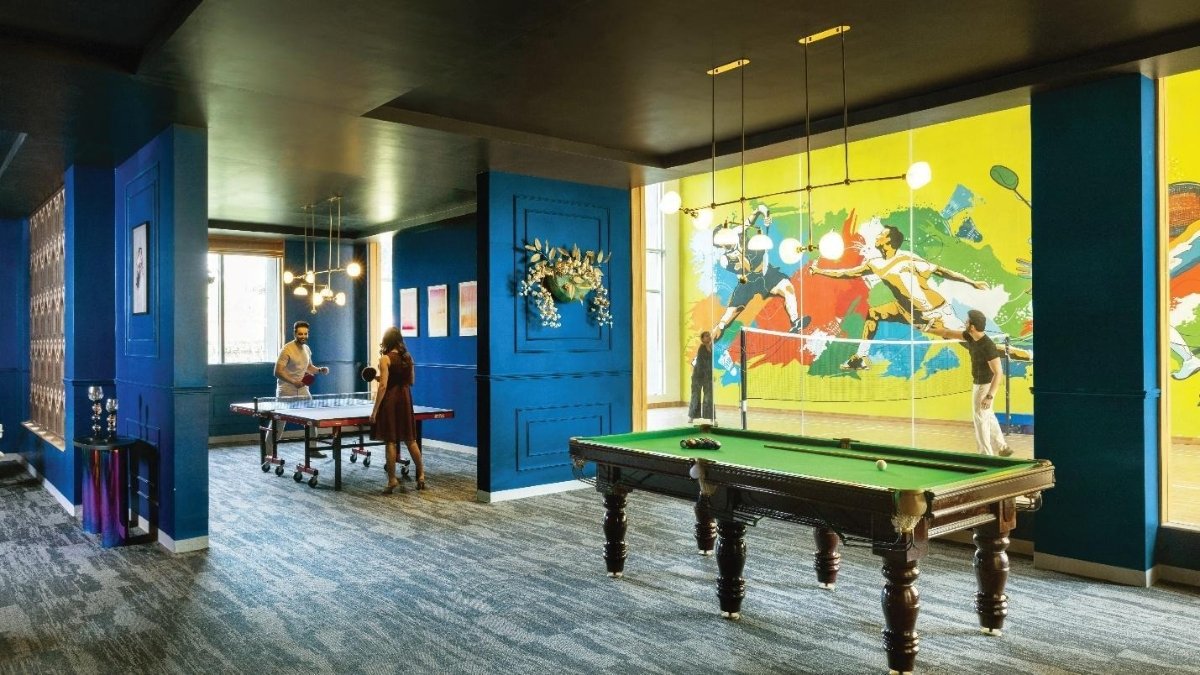
“People didn’t stop needing each other. Life just made it harder to meet.”
Kolkata (West Bengal) [India], June 2: There was a time when the community was not designed; it simply existed. You stepped out, and life was already there. Conversations on balconies, children gathering without coordination, evenings unfolding without planning.
Today, urban lifestyles have changed significantly. Longer work hours, evolving family structures, and increasingly fast-paced routines have altered how people interact within cities. According to Census 2011 data (Government of India), just over half of urban households, around 52%, are nuclear, reflecting a shift in how families live, even as traditional structures continue to adapt alongside modern urban life.
This transformation has influenced not only lifestyles but also the expectations people now have from their homes. Rising stress levels, reduced spontaneous interaction, and a growing dependence on planned engagement have begun to shape how people experience everyday life. India continues to rank among the more stressed workforces globally, as highlighted in recent research, including the Gallup State of the Global Workplace Report.
Community Centric Homes Are Becoming a Major Buyer Prefernce
Across recent housing studies, a clear pattern emerges. According to ANAROCK’s Consumer Sentiment Survey (2024), around 59% of Indian homebuyers prioritise community features and security when selecting a home. In parallel, the Knight Frank India Real Estate Report 2024 indicates that over 70% of buyers under 40 consider wellness spaces and community amenities essential, not optional.
This is further reinforced by the Colliers India Real Estate 2026 Report, which identifies community-centric developments and integrated living environments as one of the defining structural trends shaping residential demand.
There is also a financial dimension to this shift. Properties within well-planned, amenity-rich communities have been observed to command stronger long-term value retention, often in the range of 15–20% higher than comparable standalone developments, as reflected in broader residential market trends identified by Colliers and Knight Frank in their India real estate analyses.
This shift reflects a bigger behavioural change in how modern families wish to live.
Homebuyers today are actively looking for spaces where children can grow within safer environments, seniors can move freely, and families can access recreation, wellness, and social interaction without travelling across the city.
Sugam Homes Reflects the New Era of Integrated Community Living
Across developments like Urban Lakes, Morya I & II, and Crown in Salt Lake, spaces are designed to respond to different rhythms of life, often within the same day. This layered planning philosophy reflects how modern urban families now live, where work, wellness, recreation, and learning often overlap within the same routine.
Buyers searching for the best flats in Konnagar are increasingly exploring Urban Lakes for its community-focused planning and balanced lifestyle environment.
Similarly, homebuyers looking for 3BHK flats near Tollygunge are showing growing interest in Morya I & II because of their strategic location, connectivity, and integrated residential experience.
For professionals and families seeking a flat in Salt Lake Sector 5, Crown offers a well-connected urban address supported by modern lifestyle amenities and community infrastructure.
What Distinguishes This Approach is Adaptability
A clubhouse is no longer a fixed-purpose space. It evolves through the day, a yoga space in the morning, a learning or activity zone in the afternoon, and a social gathering point by evening.
Because learning, wellness, and connection are no longer separate pursuits. They overlap within the same life.
Projects like Sugam Prakriti and Urban Lakes reflect this layered thinking, where open greens, water bodies, and built spaces are planned in relation to each other, creating environments that feel active yet calm, social yet personal. Sugam Prakriti continues to attract attention among buyers searching for a flat near Garia Metro Station, especially those looking for a residential environment that balances urban accessibility with open green spaces.
Sugam feels less like a developer and more like a listener
What distinguishes Sugam Homes within Kolkata’s evolving residential landscape is its emphasis on understanding changing urban lifestyles rather than simply responding to market trends. Observing how families are evolving, how time is being spent, and what people quietly miss, and responding through spaces that bring those missing pieces closer.
Because the future of urban living is not about having more space.
As Indian cities continue to evolve, the future of urban housing may no longer depend solely on location or apartment size. It is about having the right kind of space where life doesn’t need to be chased across the city, but unfolds, gently, right where you are.
“Community, after all, was never lost. It was just waiting to be designed again.”
If you object to the content of this press release, please notify us at pr.error.rectification@gmail.com. We will respond and rectify the situation within 24 hours.