






From Scroll To Screen: When A Viral Musical Decided Hollywood Wasn’t Optional
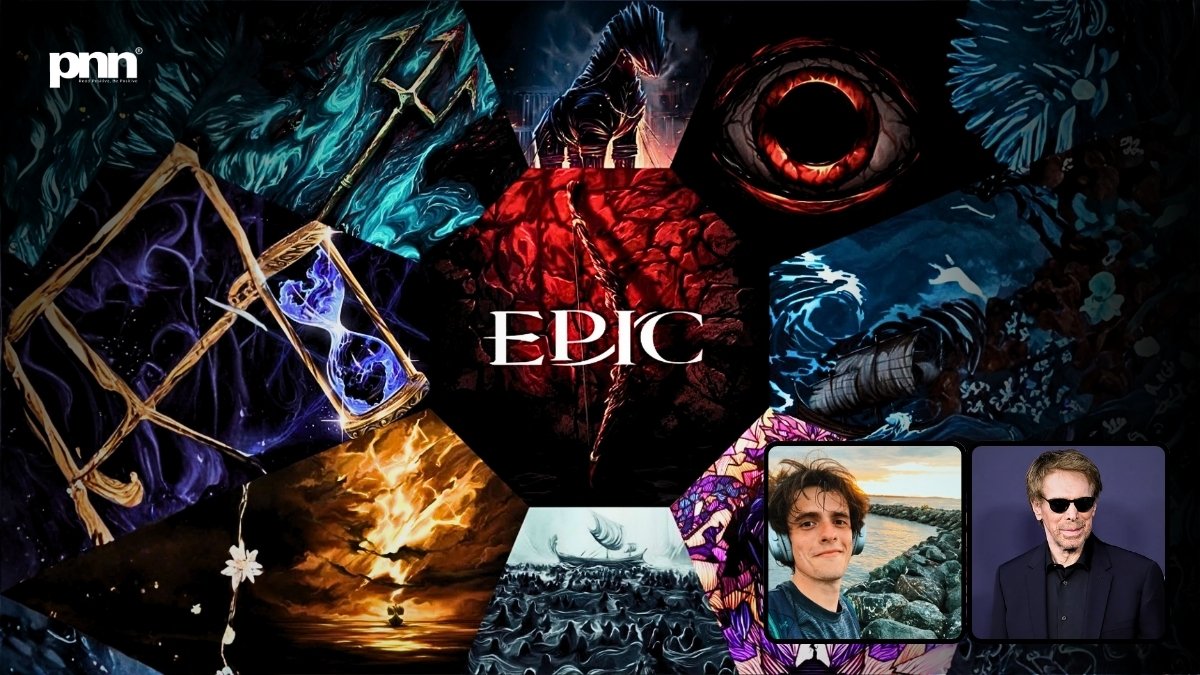
Mumbai (Maharashtra) [India], April 24: There was a time when “making it to Hollywood” required years of auditions, agents, and a tolerance for rejection that bordered on heroic. Now, apparently, it requires Wi-Fi, a loyal audience, and a story that refuses to stay niche.
The internet-born musical Epic: The Musical, inspired by the ancient Greek epic The Odyssey, has officially crossed that invisible line. What began as a passion project, released in fragments online, is now being adapted into a full-scale animated film with serious backing.
No studio pitch decks. No traditional gatekeeping. Just millions—actually, billions—of streams, a growing fanbase, and a very persistent idea.
If that sounds like a fairy tale, it isn’t. It’s a business model now.
The Origin Story Nobody Planned
Before it became a headline, Epic: The Musical lived where most experimental art does—on the internet, slightly chaotic and largely underestimated.
Created by Jorge Rivera-Herrans, the project reimagined The Odyssey through a modern musical lens. Songs were released episodically, often accompanied by animatics, snippets, and updates that felt less like marketing and more like conversation.
There was no grand launch. Just gradual momentum.
- Tracks gained traction across platforms
- Fans began sharing, remixing, and theorizing
- Streaming numbers climbed into the billions
At some point, it stopped being a project and became a phenomenon.
And like most phenomena, it attracted attention from people with significantly larger budgets.
When The Internet Becomes A Talent Agency
Hollywood has always had a talent pipeline. It just used to be… slower.
Now, platforms like TikTok, YouTube, and Spotify are doing the scouting.
- Viral content doubles as proof of concept
- Audience engagement replaces market research
- Creators arrive with built-in fanbases
For studios, this is efficient.
Why gamble on an untested idea when the internet has already validated it?
It’s less about discovering talent and more about acquiring momentum.
The Economics Of Virality
Let’s talk numbers, because sentiment alone doesn’t secure film deals.
- Epic: The Musical has accumulated billions of streams across platforms
- Animated feature films today can cost anywhere between $80 million and $200 million, depending on scale
- Marketing budgets for such projects often rival production costs
This isn’t a small upgrade from a digital project. It’s a leap into high-stakes territory.
But here’s the logic:
If millions of people are already invested in the story, the financial risk feels… manageable.
At least on paper.
The Positive Case: A New Kind Of Meritocracy
There’s something undeniably refreshing about this shift.
- Creators no longer need traditional industry access
- Audience response directly influences opportunity
- Niche ideas can find mainstream success
In many ways, this is democratization in action.
A project inspired by The Odyssey—arguably one of the oldest stories ever told—has been reborn through digital culture and is now heading to mainstream cinema.
It’s proof that storytelling evolves, even if the core narrative doesn’t.
The Slightly Less Romantic Reality
Of course, nothing scales without complications.
When internet-born content enters Hollywood, it undergoes… transformation.
- Creative control often shifts
- Narratives are adjusted for broader audiences
- Fan expectations collide with studio decisions
There’s also the risk of over-commercialization.
What made Epic: The Musical resonate was its authenticity—its slightly rough edges, its direct connection with fans.
Polish that too much, and you risk losing what made it special.
But then again, imperfection doesn’t always test well in focus groups.
The Audience Factor: Loyalty Or Pressure?
One advantage of internet-born projects is their audience.
One challenge of internet-born projects is… also their audience.
- Fans feel a sense of ownership
- Expectations are deeply personal
- Deviations from the original vision can spark backlash
In traditional cinema, audiences react after release.
Here, they’re involved from the beginning—and they remember everything.
Which makes adaptation less about creation and more about negotiation.
A Backstory Worth Not Ignoring
This isn’t the first time digital culture has influenced mainstream entertainment.
- YouTube creators transitioning to film and television
- Viral songs becoming chart-toppers
- Web series evolving into studio productions
But the scale is different now.
What used to be exceptions are becoming patterns.
And Epic: The Musical is part of a larger shift—where the internet isn’t just a platform. It’s a proving ground.
The Industry Perspective: Smart Or Safe?
From a studio standpoint, this move makes sense.
- Pre-existing audience reduces marketing uncertainty
- Data-driven insights inform creative decisions
- Cross-platform popularity enhances global reach
But there’s a subtle downside.
When studios prioritize proven virality, they may overlook original ideas that haven’t yet had the chance to trend.
In other words, the system rewards visibility—not necessarily innovation.
Which raises an uncomfortable question:
Are we discovering creativity, or just amplifying what’s already popular?
The Cultural Shift: Stories Without Borders
What makes this moment interesting isn’t just the adaptation—it’s the journey.
A story that began as:
- A reinterpretation of an ancient epic
- Distributed through digital platforms
- Built through community engagement
Is now entering a medium traditionally defined by scale and structure.
It’s a collision of timelines:
Ancient mythology. Modern technology. Mainstream cinema.
And somehow, it works.
The Bigger Trend: Digital To Mainstream Pipeline
The success of Epic: The Musical highlights a broader reality:
Digital-first storytelling is no longer an alternative. It’s foundational.
- Creators test ideas online
- Audiences validate them
- Studios scale them
It’s efficient. Predictable. Slightly ironic.
Because the same industry that once dictated trends is now… following them.
So, Is This The Future Of Hollywood?
Short answer: partly.
Long answer: it’s complicated.
Digital platforms will continue to influence what gets made. But they won’t replace traditional storytelling entirely.
Instead, we’re looking at a hybrid model:
- Internet-driven discovery
- Studio-driven production
- Audience-driven success
Which sounds collaborative—until creative differences enter the room.
The Final Thought: From Passion Project To Product
The journey of Epic: The Musical is impressive. There’s no denying that.
But it also represents a transformation.
A passion project becomes a product.
A community becomes a market.
A story becomes an asset.
That’s not necessarily a bad thing. It’s just… different.
And perhaps that’s the real takeaway:
In today’s world, the distance between creation and commercialization is shorter than ever.
All it takes is a story, an audience, and a platform willing to amplify both.
Preferably, before the algorithm moves on.