






Good Governance Week 2025 Takes Administration to the Village
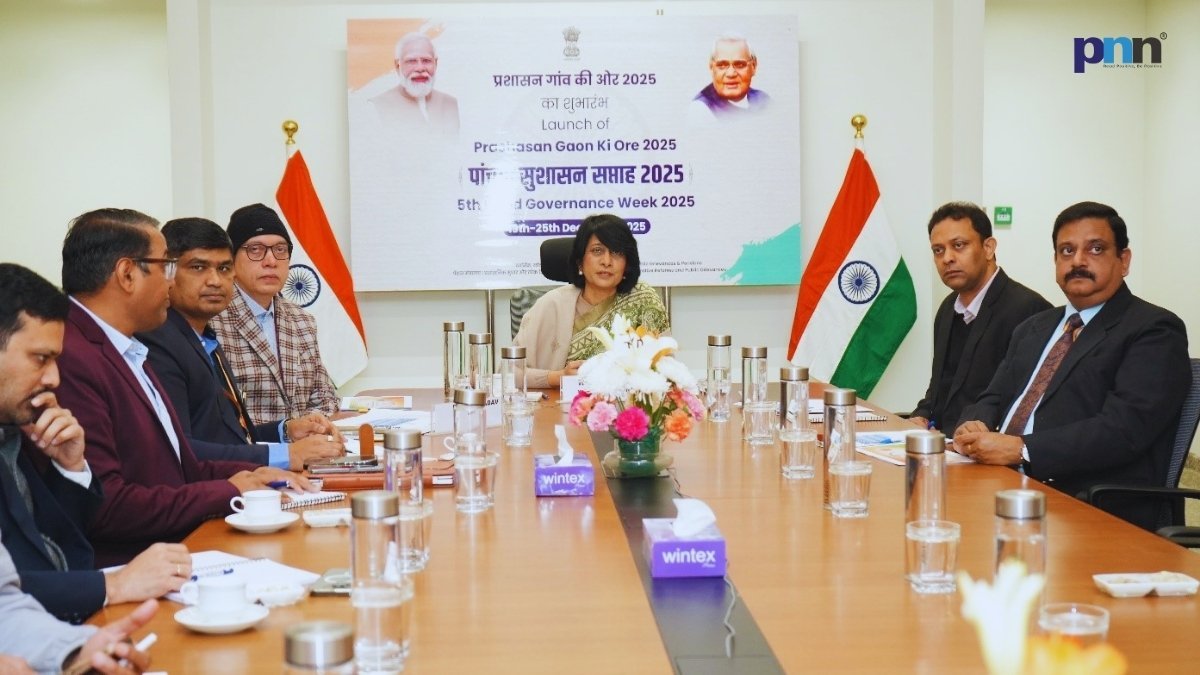
New Delhi [India], December 19: Good Governance Week 2025 is officially live. And this year, the message is blunt and unmistakable: governance only counts if citizens feel it at the last mile.
The Department of Administrative Reforms and Public Grievances launched Good Governance Week 2025 with a clear operational spine. The nationwide campaign runs from December 19 to December 25, anchored by the now-familiar but sharper initiative, Prashasan Gaon Ki Ore.
The Guidelines for the “Prashasan Gaon Ki Ore” Campaign 2025 were launched today by Smt. Rachna Shah, Secretary, DARPG & DOPT, during the virtual inaugural session of the campaign. The campaign, being implemented as part of Good Governance Week 2025, will be observed across the… pic.twitter.com/A7tm7J7SnZ
— DARPG
(@DARPG_GoI) December 19, 2025
 (@DARPG_GoI)
 Releasing the official guidelines, DARPG Secretary Rachna Shah set the tone early. Good governance, she said, is not a concept to be debated in conference rooms. It is a performance metric. Service delivery. Grievance resolution. Speed, empathy, accountability.
The timing is deliberate. The week coincides with the birth anniversary of former Prime Minister Atal Bihari Vajpayee on December 25. Over the years, what began as a symbolic observance has morphed into a results-driven administrative exercise. This edition leans harder on outcomes.
Prashasan Gaon Ki Ore remains the campaign’s backbone. The design is simple but demanding. District administrations sit at the centre. District Collectors and District Magistrates are no longer observers or coordinators. They are the lead operators.
Across India, special camps are being organised at tehsil, block and panchayat levels. The intent is direct contact. Citizens walk in. Officials listen. Grievances are resolved on the spot where possible. Services are delivered without detours.
The campaign unfolds in two tightly defined phases. The preparatory phase ran from December 11 to December 18. The implementation phase spans the official Good Governance Week, from December 19 to December 25.
During the preparatory phase, districts uploaded baseline data on grievance redressal, service delivery metrics and governance initiatives to the campaign portal. This was not paperwork for its own sake. It created a measurable starting line.
Grievances already pending on CPGRAMS and state grievance portals before the campaign window were flagged for time-bound disposal during the week. No excuses. No carry-forward games.
Once implementation began, reporting turned daily and granular. Districts track grievances resolved through special camps, CPGRAMS and state portals. They report disposal of service delivery applications. They log expansion of online services. They document governance innovations that actually work.
The early numbers explain why the Centre is confident. According to the Daily Progress Report dated December 17, 2025, states and districts resolved 2,11,098 grievances through state grievance portals even before the formal launch week began.
Service delivery saw even bigger movement. A staggering 21,71,179 service delivery applications were disposed of across participating districts during the preparatory phase. This is administration moving at scale, not symbolism.
On the ground, the outreach was visible. Districts organised 330 workshops and grievance redressal camps in this short window. Not glossy events. Functional ones.
More importantly, districts identified substance worth sharing. The preparatory phase produced 137 good governance practices and 21 documented success stories linked directly to public grievance redressal. These are slated for wider dissemination during Good Governance Week 2025.
The next milestone is December 23. On that day, every district will host a dissemination workshop. The agenda is practical. Discussions around District @100. Presentations of at least three governance initiatives implemented over the last five years. Open interaction with citizens, academics and district-level officers.
These workshops are designed to surface local innovation. What worked in one district should not remain trapped there. Presentations, question-and-answer sessions and documentation will feed directly into the campaign portal for replication elsewhere.
Rachna Shah drew a straight line between this year’s ambition and last year’s results. During Good Governance Week 2024, administrations across the country disposed of over 18 lakh public grievances. Nearly three crore service delivery applications were processed. More than a thousand good governance practices were documented, along with hundreds of innovation-led success stories.
Those numbers matter. They show institutional muscle memory forming. Systems learning to respond faster. Officers becoming more citizen-facing by default.
The Secretary was clear-eyed, though. Momentum only survives if districts operate in mission mode. Targets must be defined. Outcomes must be measurable. Engagement cannot drop once the week ends.
That message resonates in India’s administrative context. Policies are rarely the bottleneck. Execution is. By forcing district administrations to step out, report daily and show results publicly, Good Governance Week 2025 applies pressure where it counts.
The launch itself reflected national buy-in. The Chief Secretary of Maharashtra addressed the gathering in person. The Chief Secretary of Bihar joined via video conference. District administrations from across the country logged in virtually, underscoring the scale of participation.
Additional Secretary Punit Yadav, who coordinated the programme, made a direct appeal to officers. Participate fully. Own the Prashasan Gaon Ki Ore mission. Deliver outcomes that citizens can see, not just read about.
With early traction already visible, officials expect Good Governance Week 2025 to deepen trust-based governance. The logic is straightforward. When grievances shrink and services arrive on time, accountability stops being a slogan.
For citizens, the test is simple. Did the administration show up? Did it listen? Did it act?
This week, at least, the machinery of governance is being pushed out of offices and into villages. And that, frankly, is where it belongs.